
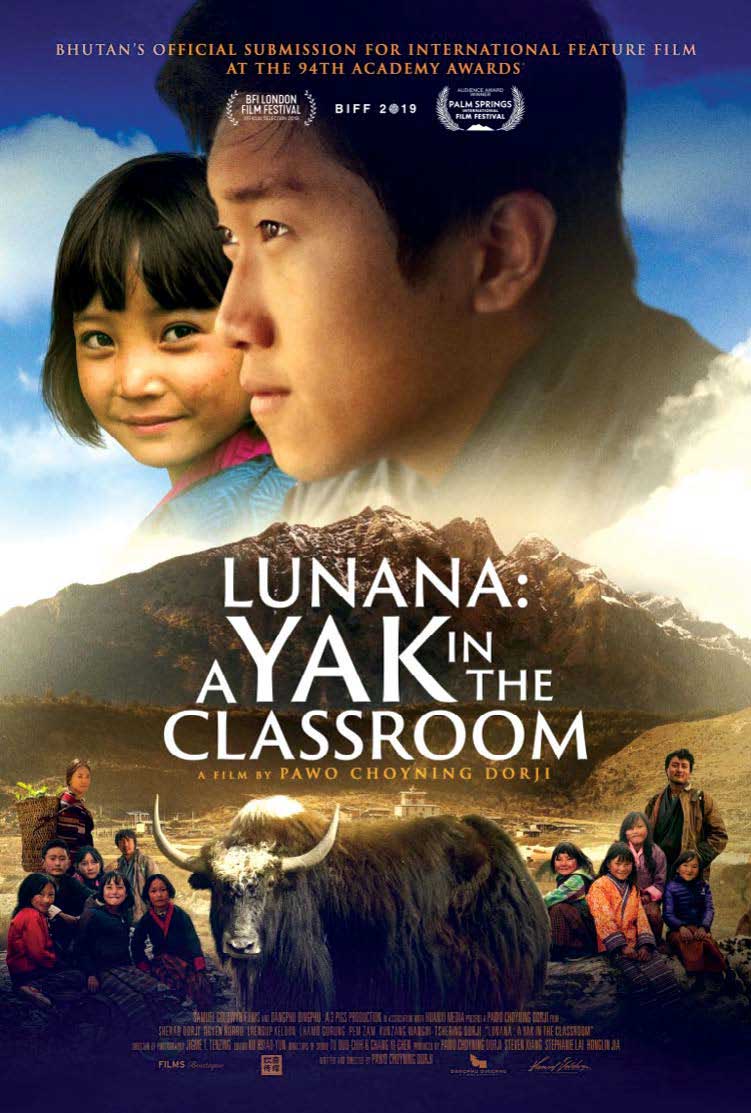
Your film ‘Lunana: A Yak in the Classroom’ was nominated for an Oscar in the Best International Feature category – which in all certainty is a historic milestone for Bhutanese cinema. What was your immediate reaction when you first heard the news?
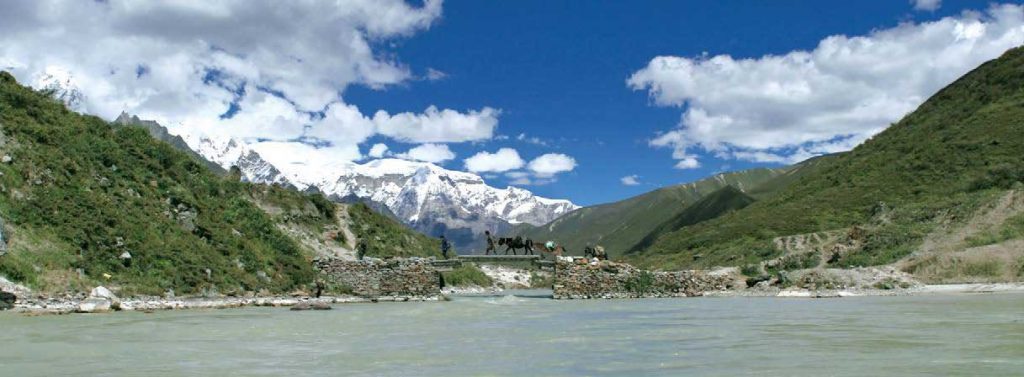
It was a very surreal moment, and it took a while for the news to truly sink in. We have to realize that making films is incredibly difficult and challenging, but the production of Lunana: A Yak in the Classroom was a challenge like no other. I wanted to counter the story of many present-day Bhutanese, who travel into the urban cities of Australia, hoping to seek out their own happiness, with a journey into the opposite end of the spectrum, a journey into the most remote and desolate place in Bhutan, and that would be Lunana. Could we discover in the shadows and darkness what we so desire to discover in the urban illumined cities of Australia? I was so adamant to shoot this story in Lunana, a place that’s a 10-day trek over the highest mountains, a place that still has no electricity or reliable network connections. There was immense strain and pressure on all the crew and cast to work and live in Lunana with these difficult conditions. We must also remember most of our cast were Lunana residents who had never even watched a film in their lives. Considering all these difficulties, an Oscar nomination was really the last thing on our wish list. When the opportunity arose to submit the film as a submission to the Academy, we did it more to try and create a space for the Bhutanese nation state, and to represent Bhutan on an international stage. There were 93 other masterpieces of cinema along with our little film, so to be nominated from these films as one of the five best films in the world… it was truly an honor.
I must add that this moment for me was a great moment of pride. Not as a filmmaker, but as a Bhutanese. I was so proud of this historic moment for our country.
What does this Oscar nomination mean to you as a filmmaker, to Bhutan, and to the Bhutanese film industry at large, which is still very much at a nascent stage?
It means so much. Since the teachings of the Buddha are the foundations of our culture and traditions, we Bhutanese have this beautiful quality of humility and modesty. However, these qualities also sometimes limit us from believing that we can also achieve something that goes beyond Bhutan. I like to think that Lunana: A Yak in the Classroom’s most unlikely journey from the world’s most remote classroom to the Oscars is a journey that will inspire the youth of Bhutan to also work hard and strive for excellence. That they too can make this journey.
The film industry in Bhutan is small, but we are also growing. Since the premiere of Dzongsar Khyenste Rinpoche’s The Cup at the 1999 Cannes Film Festival, which introduced the world to Bhutanese cinema, so much has been achieved in the indie film industry. Documentary filmmakers like Arun Bhattarai have made their mark in the documentary world, while narrative filmmakers like Khyentse Rinpoche, Tashi Gyeltshen and Dechen Roder, and Director of Photography Jigmé Tenzing continue to tell Bhutanese stories that have paved the way for a new generation of Bhutanese filmmakers. Lunana: Yak in the Classroom is a testament of how far and how much further Bhutanese films can go.
Filming in Lunana, which is located at 4000m, must have been really challenging. Can you share some of your experiences making this film at such high altitude, using local artists, actors and crew?
When I first presented the idea of trying to make a feature film in Lunana, many of my filmmaker friends told me that it would be impossible given the logistical limitations there. They tried to persuade me to make a film in an easier location and cheat the location as being Lunana. However, I really wanted the film to be as authentic as possible. I wanted this project to be more than just a film. I wanted each of the cast and crew to go on the same journey of discovery as the protagonist of the film goes on. I believed that if all of us went through the journey, then it would really carry through on to the film.
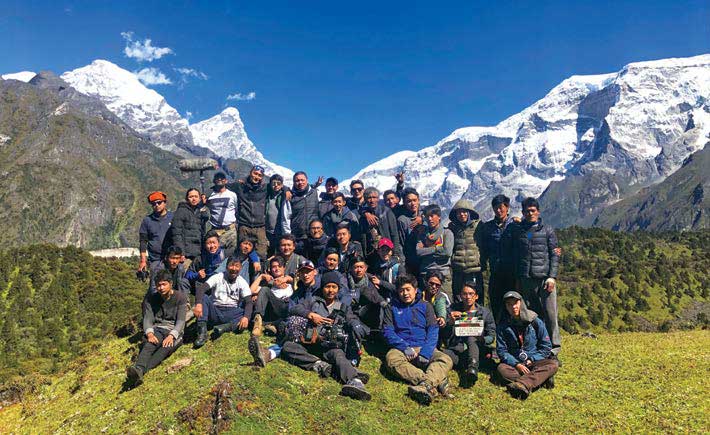
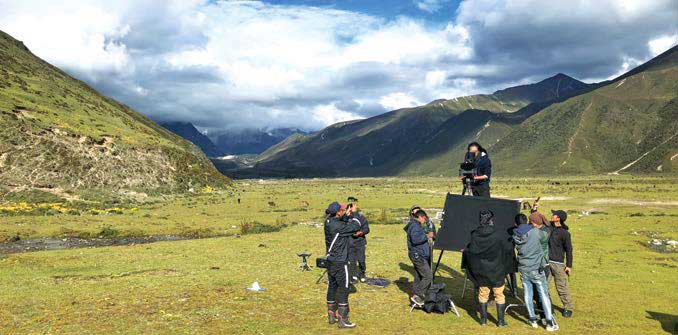
There were immense challenges, for example given that we were going to be totally dependent on solar energy, we had no idea if our cameras and sound equipment would even turn on once we got to Lunana. That is an incredible risk. Luckily our solar batteries worked, and we were able to shoot the film without any challenges, but we were very limited in what equipment we could use. We had to rely mostly on natural lights, had no power to watch dailies. Living and working in harsh conditions like we had in Lunana can be taxing not only physically but also emotionally. All of us had to home stay in local yak herders’ homes and had to go for almost two months without even a shower or proper contact with our friends and family as the network connections were very poor. Some crew even suffered from altitude sickness, but continued to work hard to bring this story to life.
Your film’s core theme deals with modern existential dilemma and crisis experienced by many young Bhutanese. How much of this is inspired from your own personal life and experience?
So much was inpsired by what I had experienced. As a son of a diplomat, I had grown up outside Bhutan. I only returned home when I was in my late teens, and went through a phase where I had to be re-introduced to the Bhutanese culture. What Ugyen Dorji, the lead protagonist in the film, goes through is a lot of what I myself went through where I had to ‘re-learn’ my own ways of life, and through re-learning, I grew to appreciate Bhutan even more. Every element in the film was inspired by true stories I had collected through my travels in Bhutan. I interviewed many teachers who were posted in the highlands of Lunana, Laya, Lingzhi and Soe to learn of what they went through. For example, Sir Dechen Tshering who was posted in Laya told me an interesting story of how he put a yak in the classroom, so I tried to re-create that scene in the movie. Another teacher told me how he had no chalk, so he taught by using charcoals to write on the wall, that has also made it into the film. Documentaries like School Among Glaciers and Price of Knowledge, and BBS stories of high schools were also inspirations for the movie.
As a filmmaker and storyteller, how important is it for you to tell stories about Bhutan to an audience beyond Bhutan?
My teacher, Dzongsar Khyentse Rinpoche, always told me that we, story tellers, have an important responsibility. He told me that we are the scribes of our time, that we must preserve within the stories we create who we are as a people, the stories of our hopes and dreams, and even our loss. He told me that our stories are what will carry on who we are onto the next generation. During the Oscars campaign a lot of media asked me if I intend to build on what we had achieved and try and venture beyond Bhutan with the films I wanted to make. I replied to them that “the fact that my film was only the 2nd film in 23 years to enter the Oscars and the first Bhutanese film in 94 years to get a nomination, shows that there is a need for more Bhutanese films to be made”. I take my responsibility as a Bhutanese storyteller a duty and responsibility as a Bhutanese.
You are going to start your next film soon. What is the key premise of the story and how is it going to be different from ‘Lunana’, if at all?
I am currently in the pre-production phase of my next film, Four Days to Full Moon. While Lunana: A Yak in the Classroom touched upon the theme of home and discovering where you truly belong, the new movie touches upon the quality of innocence. I have always believed that Bhutanese people are beautifully innocent, and it is a quality that we seem to be eager to shrug off in our pursuits of modernization.
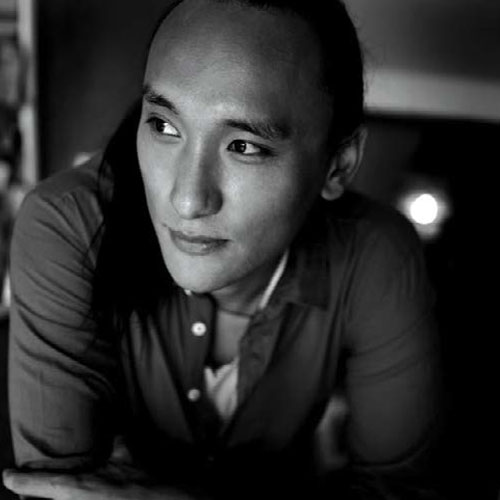
Pawo Chonying Dorji
Pawo Chonying Dorji, Director of ‘Lunana: A Yak in the Classroom’’

