
Everyday Practices, Values and Hidden Gems
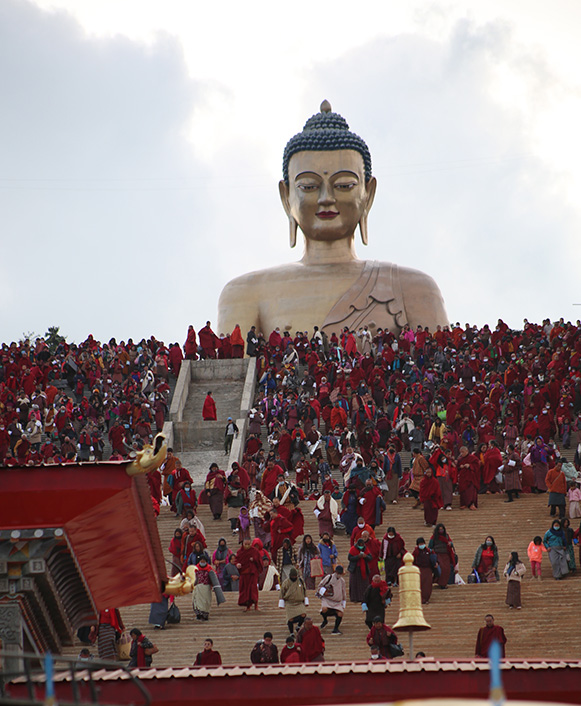
Travelling to Bhutan is a magical experience. This in large part is due to the beautiful and moving way Buddhist art, architecture, music, dance, dress, iconography, rituals and daily practices are manifested. It is hard to miss this enchanting experience, as Buddhism is vibrant in every corner of the country, from east to west, north to south. Despite the extra time required to fly to the small land-locked nation, journeying to Himalayan Kingdom is made unique because of the cultural preservation of its Buddhist locales, structures, rituals, art, philosophy, and practices. This is after all, one of the last remaining, and culturally intact, Himalayan Kingdoms in the world. It is truly amazing that signs of Buddhism can be found in the most remote corners, whether its the colorful dances that characterize its annual festivals, or the poignant chanting and music that reverberates in Buddhist temples as monks and nuns recite their daily prayers, or prayer flags undulating with the wind on a forest or mountain trek, or a monastery perched impossibly high on a high mountain top. The harder it is to get to these spiritual locales, the more isolated and the more effort Buddhist practices and values are often centered on compassion, kindness, and the practice of giving (dana). Such values can also be found in the practice of everyday life, and everywhere. From its crowded urban centers, to the most secluded village or meditation retreat high in the snow-capped Himalayan mountains required, the deeper the meaning, and more profound and rewarding the journey. Buddhist practices and values are often centered on compassion, kindness, and the practice of giving (dana). Such values can also be found in the practice of everyday life, and everywhere. From its crowded urban centers, to the most secluded village or meditation retreat high in the snow-capped Himalayan mountains
Vajrayana Buddhism in EverydayPractice
Buddhism is practiced across the Himalayas, and increasingly in many parts of the world. The specific form (or vehicle) of Buddhism engaged in Bhutan, as well as in Mongolia, Tibet and parts of Nepal and India, is Vajrayana Buddhism. What distinguishes Vajrayana Buddhism from the other vehicles – namely Mahayana Buddhism and Theravada Buddhism widely practiced in South and East Asia respectively – is the engagement of everyday rituals, daily practices, and the belief that it is possible to achieve enlightenment in one’s lifetime. Buddhism is an important aspect of daily life in Bhutan. As the predominant religion practiced in the Himalayan Kingdom, it influences many aspects of everyday life, as well as its core values. For instance, when travelling in Bhutan, it is common to come across people chanting mantras, a manner of repeating words and syllables in a melodious manner, which helps to center oneself, shift consciousness, and to invoke the path to enlightenment. Chanting mantras is carried out by ordinary people (Vajrayana Buddhist practitioners, referred to as lay people), or nuns and monks (referred to as bhikshuni and bhikkhu respectively) responsible for the preservation and dissemination of the teachings of Buddhism and providing guidance to Buddhist lay people.
Most Bhutanese and lay practitioners of Vajrayana Buddhism, will have a guru they follow, a learned lama or Rinpoche (important honored teachers, normally recognized as the reincarnation of a prominent Buddhist master), who act as their teacher, thereby introducing and guiding them through the complexity of Buddhist teachings. Some Buddhist teachings are sacred and can only be taught by a guru once the teaching or step before is thoroughly mastered. Vajrayana Buddhism also engages in rituals, practices, rites, meditation, and concentration techniques which help the practitioner gain peace, center themselves, and allow for the conditions towards an awakened mind and the path of enlightenment. Concentration on the breath, physical techniques and rituals therefore are important. Over and above all, central to Buddhist practice is a set of values, which most Vajrayana practitioners are keen to practice through key aspects of mind, speech, heart and action. These values include compassion, kindness, wisdom, as well as a deep abiding sense of generosity, ethics and morality. The good deeds associated with practicing such values towards other people and sentient beings not only help them and bring happiness to their lives, but also generate merit and good karma for the giver.
Buddhist Values in Everyday Practice
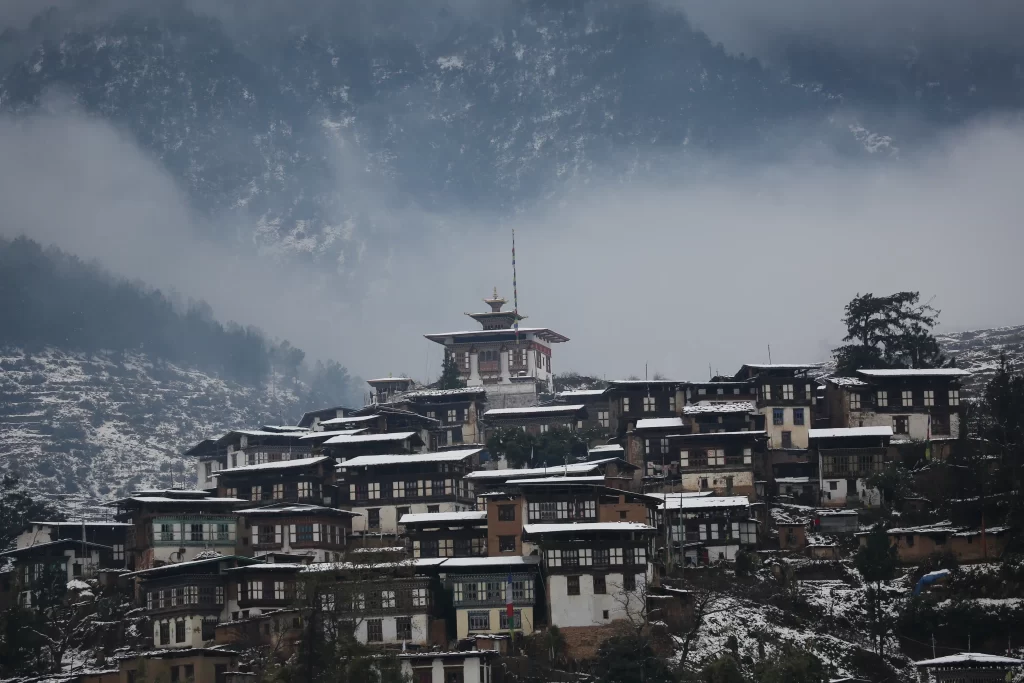
Many travelers are immediately charmed by the warmth of Bhutanese women, men and children. Often, their guides and the people they encounter will go out of their way to make tourists and foreigners in the country feel welcome. This is done through both small and large acts of compassion, compassion, generosity and wisdom, making travel to Bhutan especially enchanting. Beyond the everyday acts and practices of the virtues of Buddhism are more complex ideas of morality and ethics.
For instance, the country’s development approach of Gross National Happiness (GNH) is the manifestation of the moral values of Buddhism, mapped onto an alternative development paradigm. To ensure it is enacted, beyond mere words, it is encoded in the Constitution of Bhutan, and therefore has legal and judicial weight. Ethics are a bit trickier to describe in a few words, as well as to practice. Ethics refers to integrity, truth, justice and fairness. Ethical behavior flows from an enlightened mind, and leads to enlightened actions and outcomes. In Buddhism, ethics refers to abstaining from harming other living beings, stealing things that do not belong to you and are not earned nor freely given, or engaging in false speech (i.e. lies, and harmful, hateful and derogatory speech). Ethics also means treating all beings equally, with equanimity, while also honoring and respecting gurus, teachers and elders. The true example of this is the man known as Siddharta Guatama who gave up a life of wealth, royalty and privilege in search of enlightenment and an awakened mind free from suffering – which he fully achieved to become the Buddha – the heart of Buddhism itself.
In essence, what practicing Buddhism boils down can be captured by a powerful gem of truth: talking about Buddhism does not make you a Buddhist. What makes you a true Buddhist is in your actions, and the intentions behind those actions. Therefore, Buddhism cannot be practiced in words only, but more importantly, must be manifested in real terms, and in action based on pure intentions. A person might know Buddhist texts or enact rituals or act charitably, but without meaningful daily action to match the central virtues of Buddhism, or the purity of intentions behind those actions, these acts ring hollow. The purity in one’s motivation is therefore a central key to Buddhist values. A person’s actions carried out mechanically, or masked with mal-intent or as window dressing, or to inflate their own sense of ego or status, deviates from Buddhist values. The famous book by the Bhutanese guru Dzongsar Kyhentse Rinpoche, “What Makes you Not a Buddhist” is about this, a must read on any trip to Bhutan.
Socially Engaged Buddhism is an approach to Buddhism that espouses the need to match words with action, especially in terms of the pressing issues facing our world today. It advocates for Buddhists to take action on the climate emergency, environmental degradation, mass consumerism and materialism, discriminatory and unethical practices, and abusive or harassing conduct, for instance. And within all this, is the importance of pure motivation, based on
intentions to be kind, compassionate, benevolent and generous.
Respecting Local Buddhist Practices and Foreign Travelers
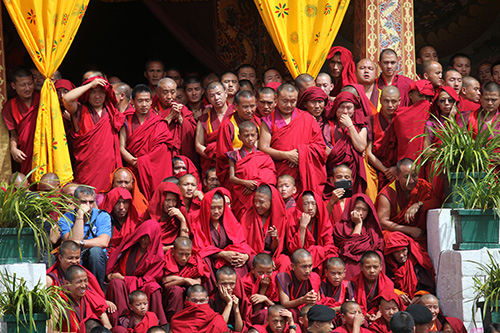
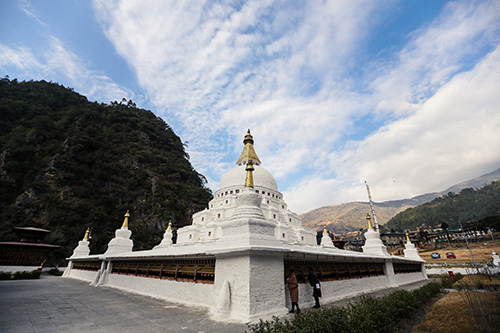
the opportunity to travel to sacred as well as everyday Buddhist sites in Bhutan is not just an amazing opportunity, it is also a blessing. It allows the traveler to experience Buddhism, in all its spectacular manifestations. Bhutan is unique, because of the central importance Buddhism plays in every life. The nation is made up of active, well-preserved sites and practices of Buddhist worship, rituals and beliefs. Buddhist practice is not only a matter of daily practice, it also involves action and pure motivation in everyday life. The Buddhist path is therefore both external, as well as internal, as it entails inner reflection, contemplation, meditation, as much as it entails doing good deeds, genuinely helping others, and taking action that is rooted in purity of intention and motivation.
While Bhutan may seem like a utopian “shangrila”, as it is sometimes referred to by tour companies and in the social media, it is a living, breathing nation, made up of everyday people. Buddhist practices, that the traveler may find enchanting and charming, are important rites and rituals for everyday Bhutanese men, women, children, monks and nuns. While Bhutan is a happy country in many aspects, Bhutanese people also feel the full range of emotions of being human: sadness when someone passes away, anger when someone steals from them or treats them unfairly, the frustration of having to deal with accidents and unjust situations, or having their places of spirituality disrespected by unsuspecting or rowdy tourists. In all of this, is the importance of practice of wisdom, patience, kindness and gratitude.
For foreign travelers, a trip to Bhutan is the opportunity of a lifetime, to see and experience rare, mystical and breathtaking beautiful locales and events where Buddhism plays a central role in shaping life. It also reminds us of the responsibility we have as travelers, pilgrims and tourists. Therefore, we must tread carefully and gently, with great respect and compassion in the locales that we visit. These spiritually, culturally and environmentally important sites are not just “tourist destinations” but are the central ways of life for people and all other sentient beings that inhabit these precious spaces. We are mere visitors passing by, but also have the potential of being transformed by our travels, while being careful not to impact or harm such fragile locales in turn. As the famous saying goes, take only memories, leave only footprints. Similarly, the Bhutanese who welcome foreigners are aware that visitors are a blessing, and will go out of their way to remain true to these beliefs through acts of generosity, wisdom, kindness, compassion and equanimity. Bhutan therefore provides both the traveler and local people with the conditions of inner-transformation – and the power to awaken mindfulness, compassion, kindness, and a reminder that we are all interconnected with one another, to nature and this amazing planet we share with all other sentient beings.

DR. RITU VERMA
An anthropologist, researcher, author and photographer, she has published extensively on GNH, Bhutan, and beyond. She is a regular columnist in this magazine. Find her at rituvermapuri.wordpress.com, ucla.academia.edu/RituVerma and twitter.com/Rituvermapuri
