BHUTAN’S FIRST FLYFISHING OUTFITTER, HIMALAYAN FLYFISHING ADVENTURES, OPENED IN 2024, BRINGING INTERNATIONAL ANGLING EXPERTISE TO THE COUNTRY. WITH THE GLOBAL ANGLING MARKET BOOMING, BHUTAN IS POISED TO BECOME A PREMIER DESTINATION FOR ADVENTURE-SEEKING ANGLERS.
Bhutan, nestled amidst the world’s tallest mountain range, serves as a dreamscape for outdoor enthusiasts. Her towering Himalayan peaks, rapidous whitewater rivers, pristine forests and jungles and ubiquitous wildlife create a setting for countless recreational opportunities and the chance to viscerally connect with nature. Hiking, trekking, mountain biking, white-water rafting, kayaking, golfing, and motorcycling are all common outdoor endeavors in this modern-day Shangri-La and are enjoyed by Bhutanese and international visitors alike.
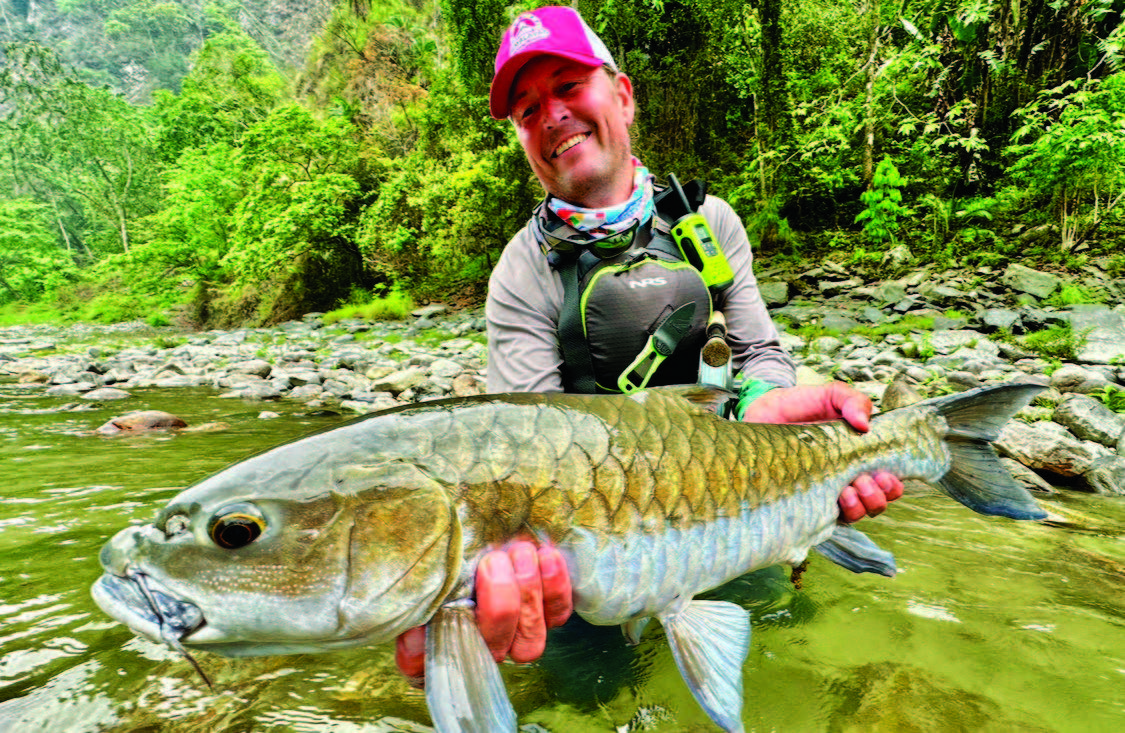
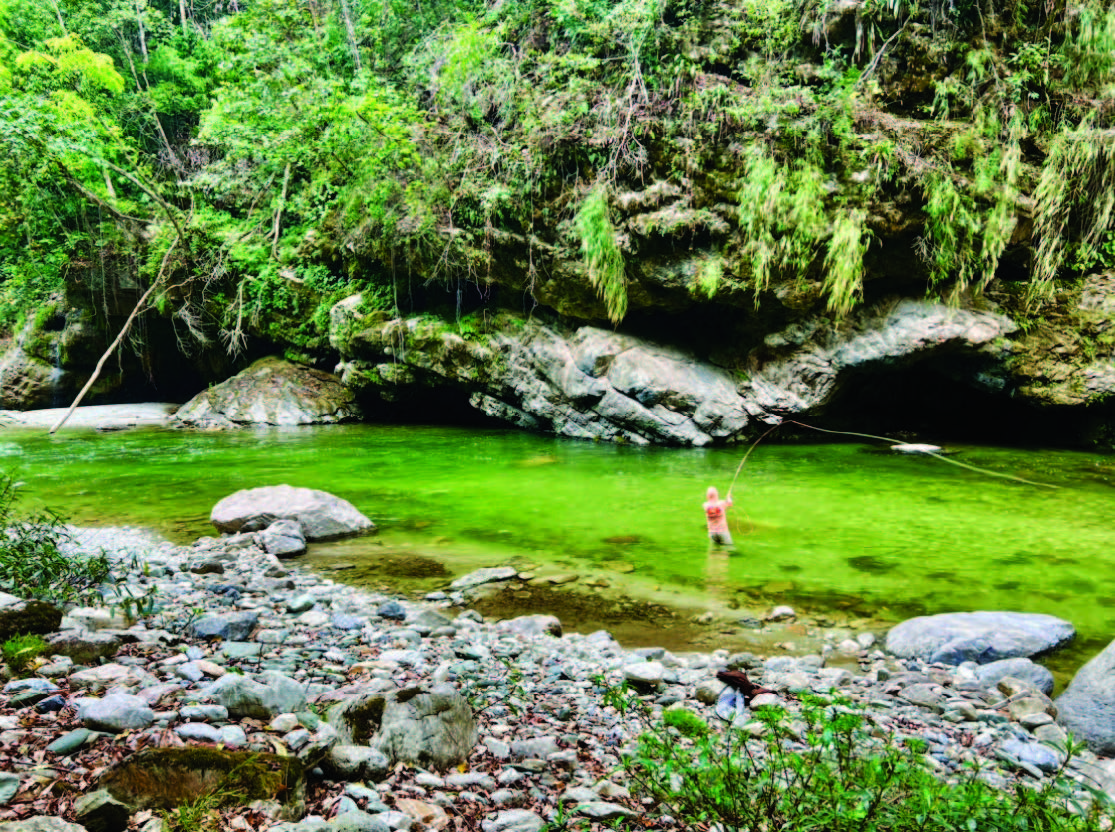
In 2022, another highly-valued outdoor recreation was introduced to the kingdom, namely flyfishing. Well, in truth, flyfishing for trout has been allowed across much of the kingdom since 1974 when the first fishing seasons were officially approved. But in 2022, after a lengthy process of scientific study, fisheries conservation initiatives, consultations with international fisheries experts and input from various sectors of Bhutan’s government, a commercial recreational angling program was approved for the region’s most highly-prized piscatorial species, the Himalayan Golden Mahseer.
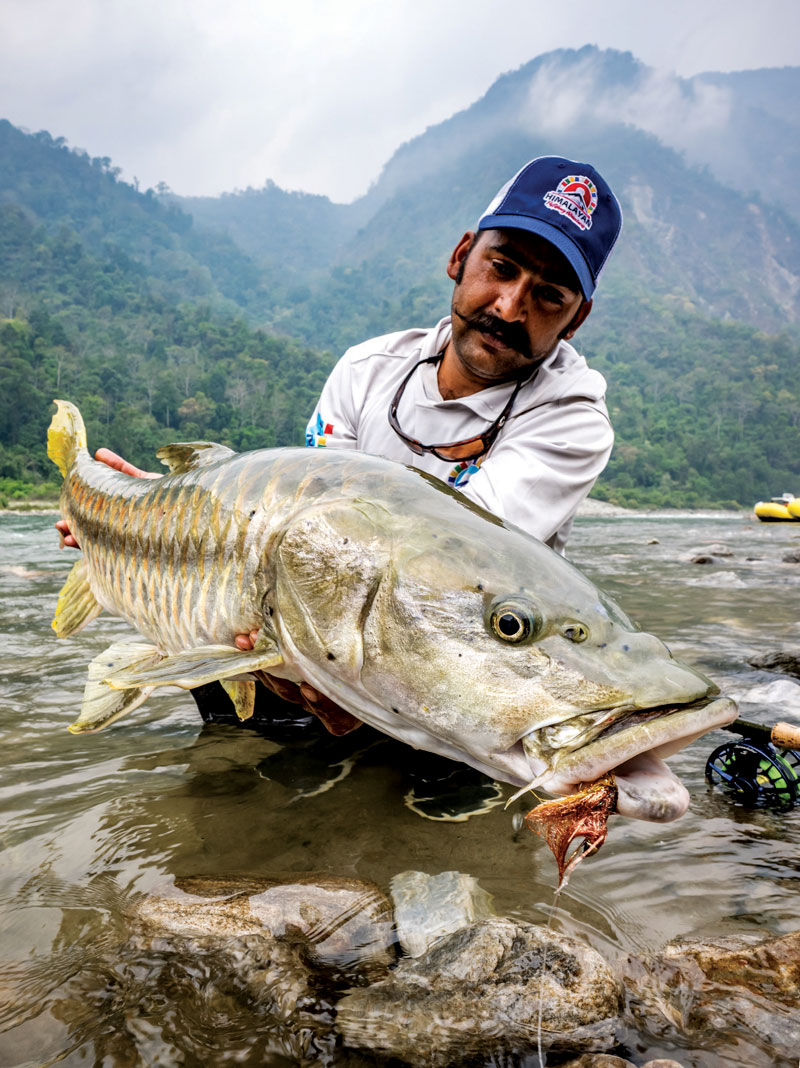
Golden Mahseer (Tor putitora) which grow to lengths of nearly six feet, and their somewhat smaller though no less aggressive cousins, Chocolate Mahseer (Neolissochilus hexagonalepis), are known by many international anglers as two of the most desirable – and most difficult to catch – fish species on the planet. These riverine alpha-predators range from Afghanistan in the western Himalaya through Pakistan, northern India’s Uttarakhand and Himachal Pradesh states to Nepal, Bhutan, northeastern Indian Aranachal Pradesh and eastward into Myanmar.
Built for speed and evolved in fast-moving, steeply cascading Himalayan rivers, Golden and Chocolate Mahseer are omnivorous, commonly devouring fellow fish species while also sipping on surface and sub- surface insects including mayflies, caddisflies, stoneflies, grasshoppers and cicadas as well as routinely consuming algae, fruit, leaves and detritus. When hooked by a flyfisherman, mahseer can present one of the most aggressive and violent fights of any fish their size, anywhere on Earth.
The first officially-sanctioned recreational Bhutanese Mahseer Expedition was executed in March 2023 by Himalayan Flyfishing Adventures based in Thimphu. Since then, international adventure anglers and local Bhutanese fishermen have begun to pursue Mahseer on several of Bhutan’s southern rivers including the Nyera Amo Chhu, Drangme Chhu, Mangde Chuu, Manas Chhu, Punatsang Chhu and others per the kingdom’s National Recreational Angling Program. Between 2023 and 2024, more than 6,000 fishermen purchased fishing permits, the vast majority being international visitors, generating some Nu 3.236 million in revenues.

According to Tshering Sonam Wangmo, statistical officer at the Ministry of Energy and Natural Resources, due to Bhutan’s expansive river systems and developed fisheries conservation efforts, high-end recreational angling could become a substantive eco-tourism offering. “This initiative not only enhances adventure tourism but also serves as a conservation by-product that can help generate national revenue,” she said.
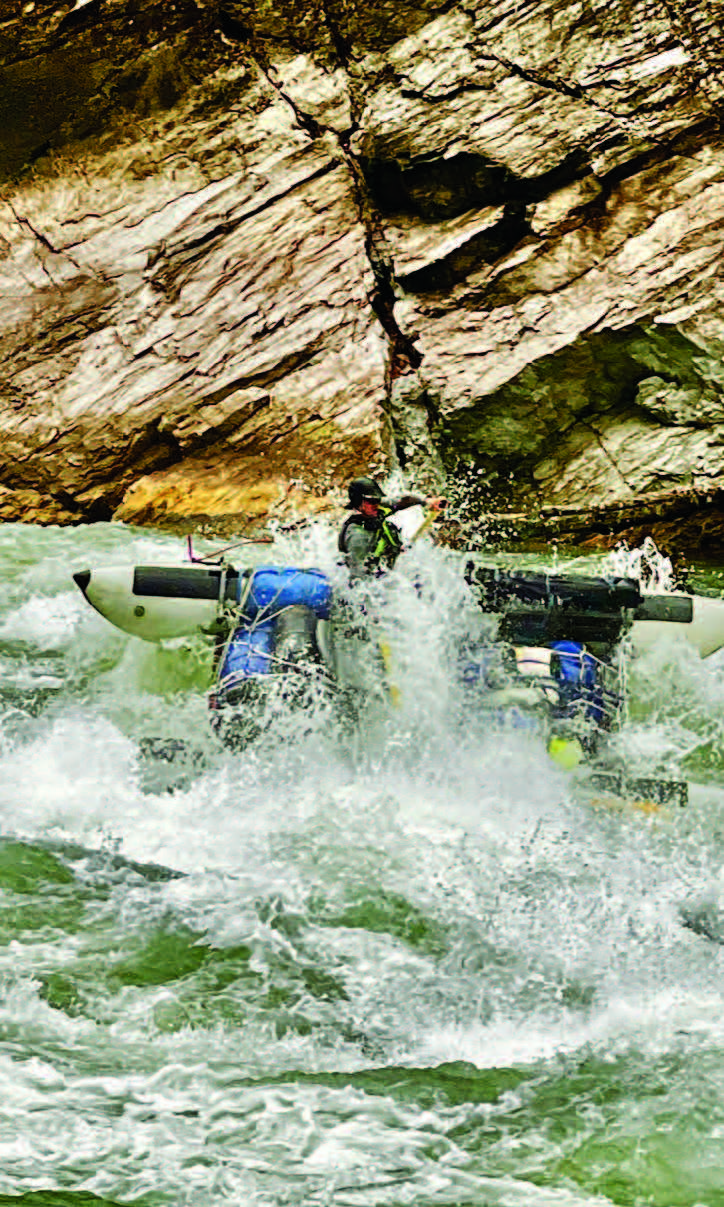
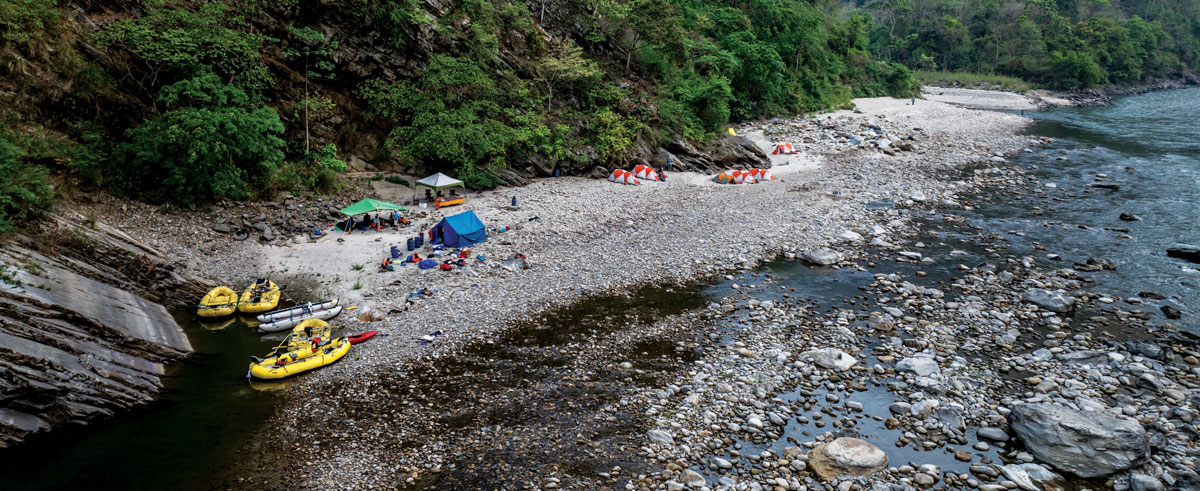
Depending on specific regulations for given river segments, permits can be obtained allowing single-day walk-and-wade excursions or multi-day wilderness float trips. International anglers are required to be accompanied by a certified Bhutanese fishing guide and only the use of single barbless hooks is allowed. Another important requirement of international anglers is to release fish immediately after landing them using best practices of minimizing fish handling, keeping fish in the water and reviving fish if necessary once landed. As a result of these thoughtful policies, mahseer can be recreationally angled and released with a near-zero mortality rate and remain available to reproduce and contribute to the significant revenues which are now being created as a result of the introduction of mahseer fishing in Bhutan.
The story behind the kingdom’s evolution into the International Angling Market is an interesting one. The first British explorers arrived in the region now known as Bhutan in the late 1700s as they searched for a trade route from Tibet to the plains of India. En route, a few diehard anglers tried casting fly spoons on silk and horsehair lines into the massive Himalayan rivers they encountered. On occasion, these early anglers met with success while dredging the pools and runs of these powerful southern rivers and an appreciation for the hard-fighting nature and natural beauty of mahseer was quickly established.
In fact, some photographs from the 1800s show anglers holding monstrous specimens, some reaching weights well over 100 pounds and six feet in length. Some of that era’s most famous adventurers, including Jim Corbett of neighboring India, considered the Golden Mahseer to be the very finest of all game fish. However, once the kingdom of Bhutan was united under His Majesty Ugyen Wangchuk, the First King of Bhutan in 1907, and in consideration of the Buddhist tenets which led the nation, angling for mahseer was disallowed.
However, over a century later in 2014, a group of deeply passionate fisheries scientists and conservationists from North America’s Fisheries Conservation Foundation (FCF) approached the Royal Government of Bhutan with a proposal to execute a radio telemetry study of Bhutanese mahseer. Little data regarding mahseer behavior, reproduction or migratory habits was documented by the scientific community at that time and the pristine nature of Bhutan’s rivers provided an unmolested opportunity to gain meaningful insight through scientific study.
Once this proposal was approved, Dr. David Phillip and Julie Claussen of FCF initiated a five-year study which necessitated tagging over 100 mature Golden and Chocolate Mahseer with radio transponders that would communicate data to a series of receiver stations placed strategically throughout primary mahseer habitats in the southern kingdom. The results of this study have served as the basis for vast amounts of scientific data which accurately depict the migration patterns, spawning and seasonal behaviors of Golden and Chocolate Mahseer in Bhutan.
Next, in 2018, Bhutan hosted the first-ever International Mahseer Conference in Paro at the Zhiwa Ling hotel. The conference was attended by fisheries biologists, taxonomists, conservationists, international funding representatives and recreational angling professionals from across Asia’s mahseer range in addition to attendees from North America, South America and Europe. The various workshops, panel discussions and presentations ultimately led to the publication of the Bhutan Declaration, a document which spelled out the goals of the greater international mahseer community in regard to the promotion, protection and scientific study of all things mahseer.
In 2020, the second International Mahseer Conference was held in Chiang Mai, Thailand which continued the ongoing escalation of scientific and recreational interest in mahseer and several representatives from Bhutan were in attendance. An increasing focus on the conservation benefits of recreational catch-and-release fishing became a strong theme of IMC 2 and the wheels were set in motion as the Bhutanese government gave serious consideration to creating its own national angling policy.
Fast forward to 2023. As the Bhutanese government had now accomplished the necessary steps of scientific study, fishing permit infrastructure development, fishing guide training programs, fishing area zonal designation, fee structures, launch permit plans and all necessary aspects to initiate a National Recreational Angling Program, the first mahseer fishing season was opened to local and international anglers. Post-COVID, this was a welcomed novel revenue stream, immediately beneficial to the kingdom and her people.
The fisheries and community conservation aspects of recreational angling were also a central consideration for the enactment of the program. Bhutan believed, based on significant and time-tested programs around the globe, that by having more anglers engaged on her rivers, oversight of fisheries and the threats to those fisheries, would be significantly mitigated. The threats which were identified included illegal catch-and-kill fishing practices, effects of sand, boulder and coal mining, poaching with the use of poison, gill nets, electricity and explosives and unpermitted manipulation of river corridors, among others.
Today, Bhutan’s mahseer rivers are providing a new frontier for the international angling market which generated US$72.5 billion globally in 2023 and is projected to grow to approximately US$211 billion by 2033. Bhutan’s first flyfishing-specific flyshop, Orvis- endorsed Himalayan Flyfishing Adventures, opened its doors in downtown Thimphu next to Clock Tower Square in the spring of 2024 and is constructing the kingdom’s first fishing lodge on the banks of the mighty Mangde Chhu river in Bhutan’s southwest. Undoubtedly, as interest grows in Bhutan’s fishing offerings, public and private sector revenues are sure to increase as well.
Anglers from around the world are quickly discovering the unique and remarkable angling opportunities present in the Dragon Kingdom. For those who have already tried their hand at flyfishing for Golden and Chocolate Mahseer, it can be accurately stated that there is no international offering that compares. For adventurous anglers who are looking for a unique and novel experience with flyrod in hand, flyfishing’s New Frontier is now open to you.

Bryant Dunn
He is the International Director of Dunn Outfitting International and Himalayan Flyfishing Adventures in Thimphu. He also serves as the Fly Fishers International Ambassador to Bhutan. He can be reached at dunnoutfitting@gmail.com.