

Festival Highlights
HAA TSHECHU
This three-day festival of mask dances is held annually at the courtyard of Lhakhang Karpo. Various mask dances are performed during the Tshechu. The Tshechu concludes with the unfurling of Guru Nangsi Zilon Thongdroel (giant appliqué).
HAA SUMMER FESTIVAL
Held in the month of July every year, this festival celebrates the unique lifestyles of yak herders and nomadic communities and the living culture of Haa valley.
CLIMATE
Warm in summer and cold in winter
BEST TIME TO TRAVEL
Spring and Autumn
CLOSEST AIRPORT
Paro Airport (International Airport)
DISTANCE FROM THIMPHU
3hours (105km) via Chelela Pass
PLACES TO SEE
Lhakhang Karpo
According to legend, Lhakhang Karpo (White Temple) is one of the 108 temples built in one day by Tibetan Emperor Songtsen Gampo in the 7th century. The Emperor is said to have released two pigeons – a white and a black one – to choose an auspicious location for the construction of the temples. Lhakhang Karpo was built at the foothills of three towering mountains known as Rigsum Gonpo where the white pigeon landed. The Lhakhang houses the shrine of Ap Chungdu, the principal deity of Haa valley

Lhakhang Nagpo
Lhakhang Nagpo (Black Temple) is located in Dumcho village, 15-minute walk north of Lhakhang Karpo. The Lhakhang derives its name from the black pigeon that landed on the site where the temple is built. It is believed that Lhakhang Nagpo was built on top of a lake, and the doorway on the floor of the temple is believed to be the passage to the underworld of the water spirit. The temple houses the shrine of the local Dado Tsen.
Wangchuk Lo Dzong
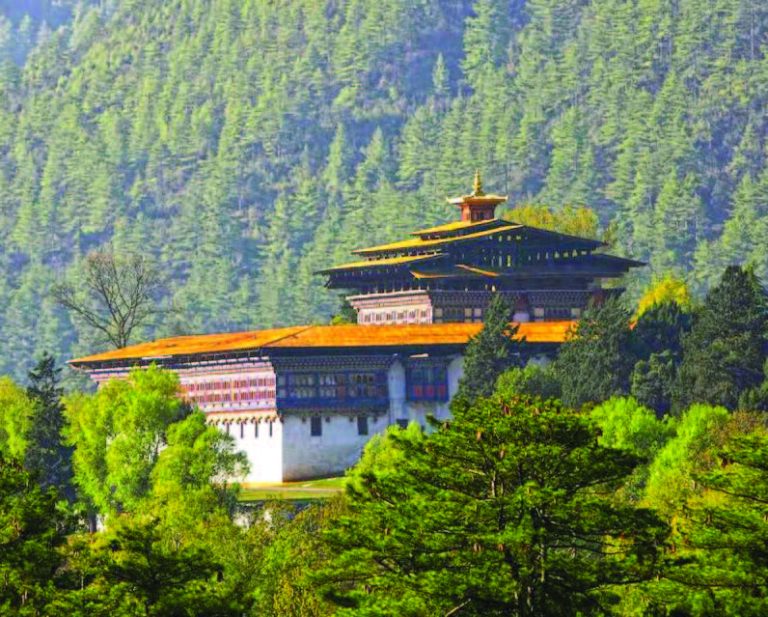
Built in 1915, Haa Wangchuk Lo Dzong is one of the newest dzongs built in the country. The Dzong was built after the old Damcho Dzong was razed to the ground by fire. Haa Dzong is much smaller in size compared to other dzongs in the country, which are usually built on ridges or hillsides as a defense fortress against invading forces. In 1963, Haa Dzong was handed over to the Indian Military to be used as training and coordination center.
THINGS TO DO
Nup Tshona Patra Trek
This six-day Nup Tshona Patra Trek is one of the most scenic treks in the country. The trek takes hikers through the scenic Haa valley, along beautiful alpine meadows and rhododendron scrub to the sacred lake, Nub Tshona Pata. The trail offers spectacular views of Mt. Gangkar Puensum and Mt. Kachenjunga. The trail ranges in altitude between 2,735m to 4,420m.
Try local delicacy ‘Hoentoe’
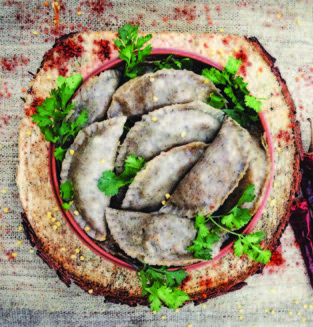
Hoentoe is by far the most delectable dish originating from the exotic valley of Haa. A trip to Haa is incomplete without sav dumpling stuffed with an assortment of ingredients that include dried spinach or turnip leaves, cottage cheese, butter, perilla seeds, ginger, and clove garlic. Hoentoe can be either steamed or fried. Hoentoes are usually eaten with ezay (a chili paste made from local dried chilies). The people of Haa serve this traditional dish during Lomba – the New Year Festival celebrated in Haa and Paro. JANUARY-FEBRUARY 2023
Haa Summer Festival
The Haa Summer Festival celebrates the unique living culture of Haa valley, nomadic lifestyles, and rich gastronomical traditions of people of Haa. During the festival various religious performances and folk dances are exhibited. It also offers the unique experience to immerse in traditional sports and local cuisines of Haa valley.
Rangtse Ney
About four-hour drive from the Haa-Chuzom Highway, Rangtse Ney (Lime Caves) is a sacred site believed to be the secret abode of 8th century Buddhist saint Guru Rinpoche and his spiritual consort Khandro Yeshey Tshogyel. Rangtse Ney became a popular attraction after His Majesty the King visited the site on 23rd December 2017. Locals believe that there are seven doors inside the cave. Footprints of Guru Rinpoche and holy pudenda of Khandro Yeshey Tshogyel are visible on the rocks inside the cave. Guru Rinpoche is said to have hidden sacred treasures in the cave.


