
CULTURE, THE LIFE FORCE OF BHUTAN
This article is dedicated to the late, legendary Han Solo – a beautiful and incredibly special Bhutanese dog who loved his treats, hugs, adventures, living life to the fullest, and exploring the mountains of Bhutan. He brought such joy and happiness to all who knew him. He will be deeply missed.
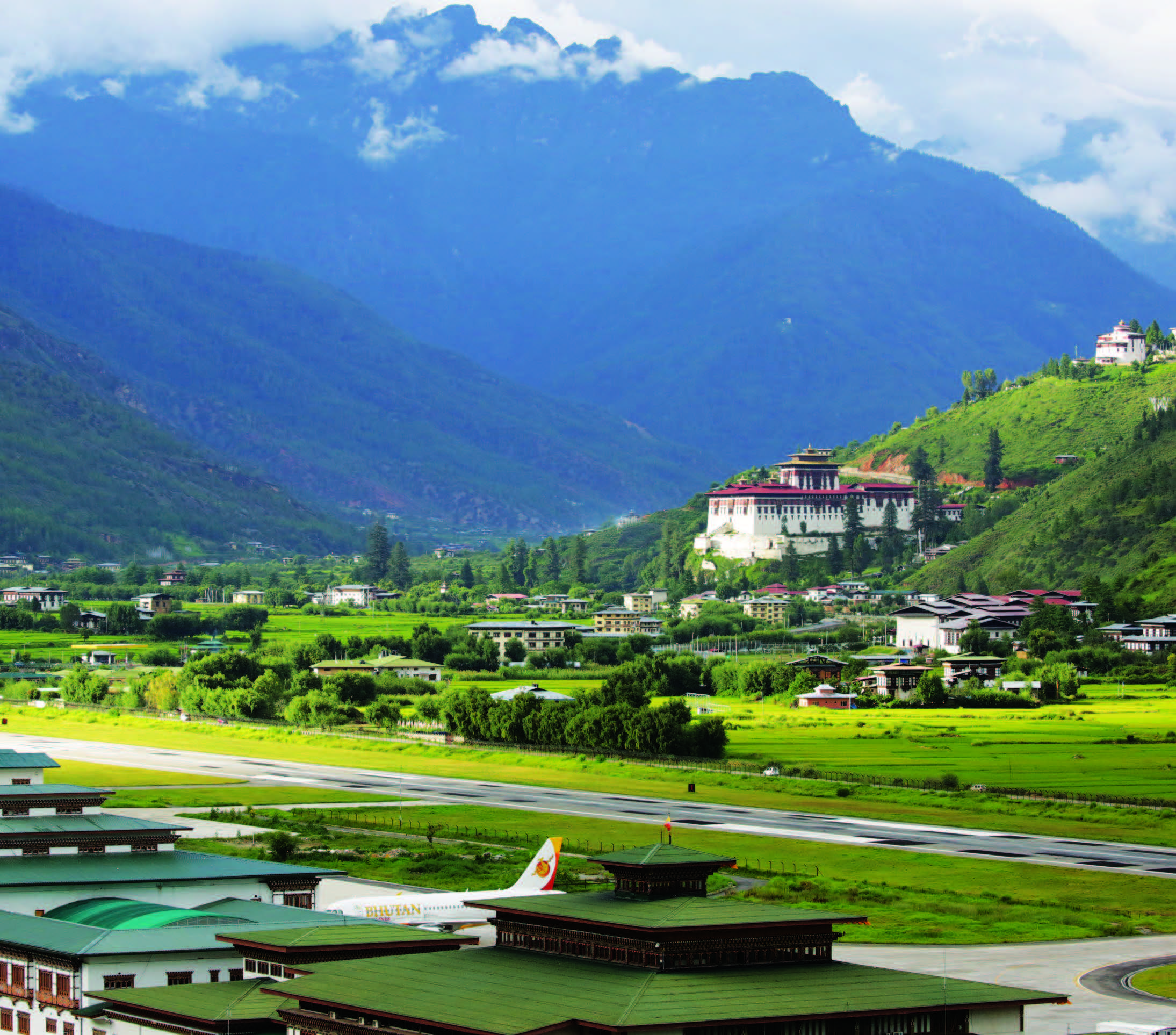
Bhutan is one of the most unique cultural destinations in the world. Travelers sense its wondrous cultural landscape even before touching down at Paro International airport. As one flies into the country, the landscape transitions drastically, in ways that are different from anywhere else in the Himalayas. It not so much the topographical and mountainous landscape (which are nonetheless spectacular), but what is unique is the stunning cultural landscapes. Various cultural landmarks and structures strike a strong contrast to the lush green and golden brown of the Himalayan mountainside. It is a visual wonder, from the spectacular architecture of its dzongs (fortresses) and traditional houses, to the thousands of colorful prayer flags fluttering in the wind, to the iconic gold pinnacled Buddhist lhakhangs (temples) and chortens (stupas). All this in exquisite view, even before landing in Paro!
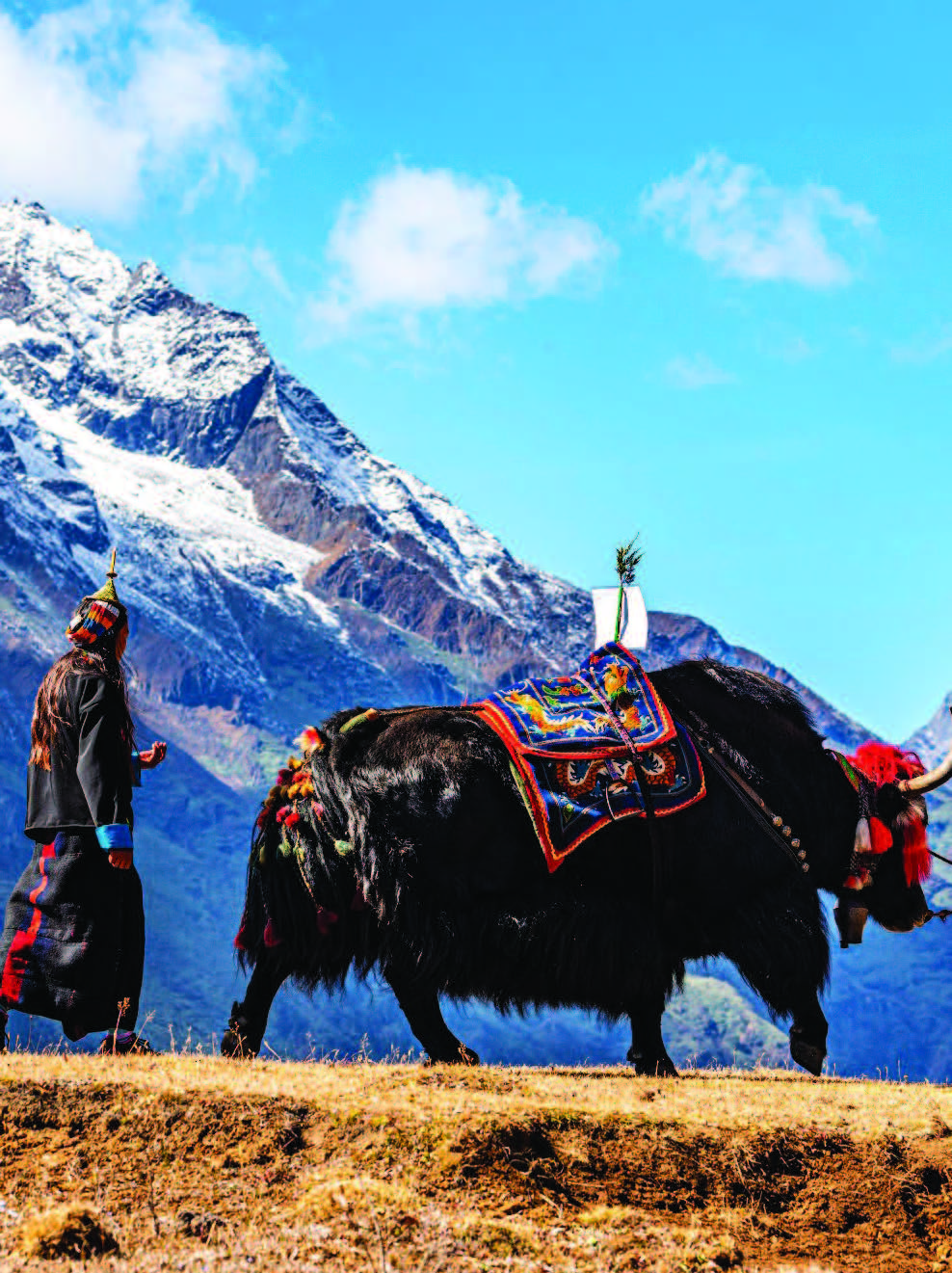
At the gateway of many travelers’ journey, is the main airport building carefully and mindfully built according to Bhutanese architectural heritage practices, with its interior and exterior walls, windows and columns adorned with bright Buddhist symbols and iconography. Tradi- tional Bhutanese art inter-mingles with contemporary art in the arrivals and departure halls, which feature the work of many renown and up-and-coming talented Bhutanese artists and craftspeople. Bhutanese officials outfitted in intricately woven national dress (kiras for women and ghos for men) warmly welcome travelers to the country. As tourists makes their way to Thimphu, Paro town or to different parts of the nation, it becomes apparent that the national dress is not only worn for official purposes, but is worn by people throughout the country in the course of the day, with highland indigenous people and lowlanders having their own unique cultural dress. As the traveler journeys deeper into the country, their senses come alive with different scenes, sights, sounds, scents and feelings of being in the Land of the Thunder Dragon, arguably the last culturally intact Himalayan Kingdom in the world. Both material and intangible forms of culture intermingle to bring about an intoxicatingly unforgettable experience.
Culture as a Living Life Force
Culture is perhaps the most deeply imbedded force in any society, but is also often taken for granted, ignored or misunderstood. With the rise of materialism, mass consumption, individualism and Western-style capitalism throughout the world, culture is rarely “seen” or valued, unless it can be commodified or shown-off in small sound bites on social media. Within these problematic global trends, Bhutan shines as a remarkable exception, with not even one commercial advertising billboard to be seen anywhere in its towns, roads and highways.
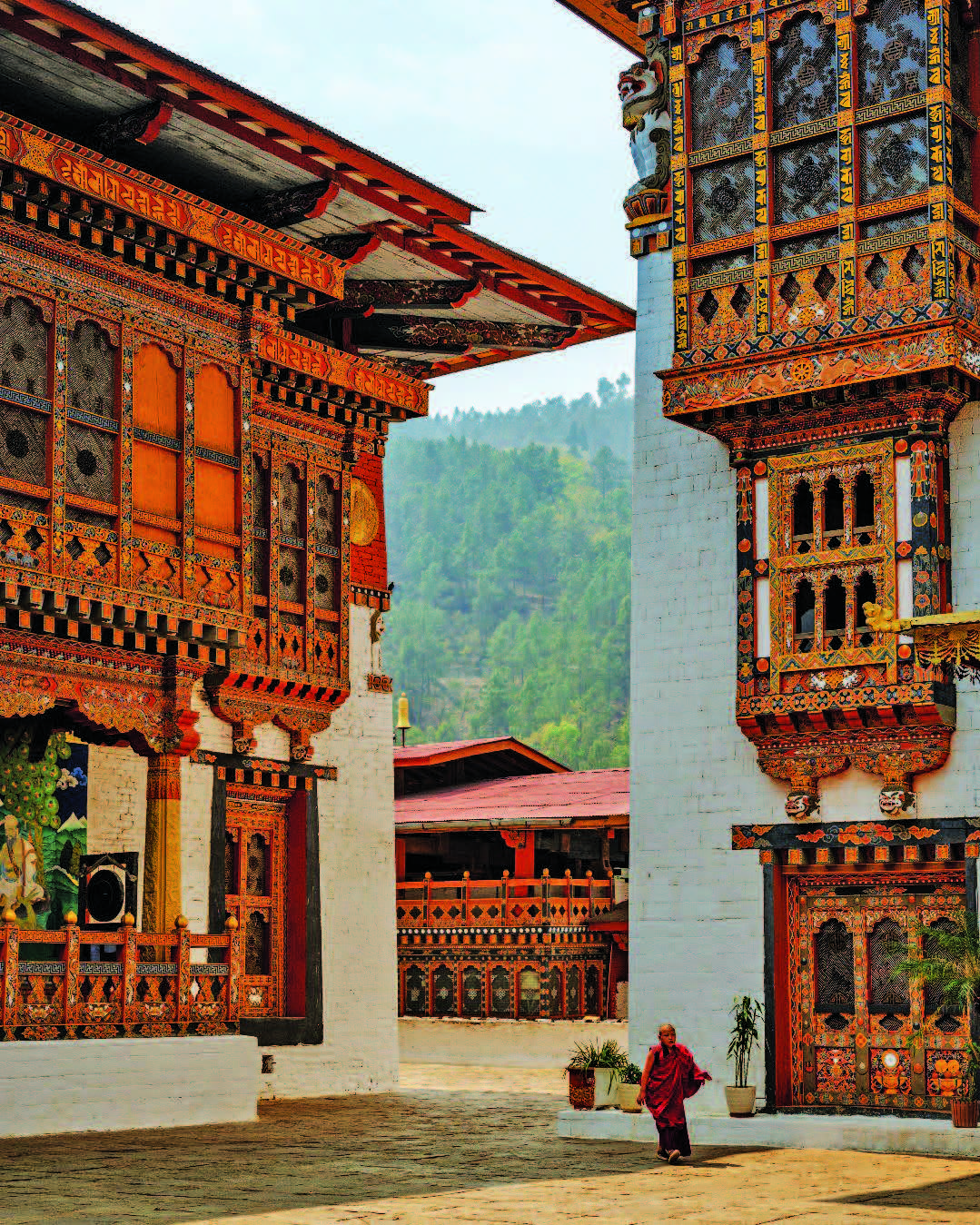
Worldwide, culture manifests itself in both mate- rial and intangible forms. In nations across the world, people visualize and create into being through authentic, context-specific artistic, social, performative and ritualistic cultural forms. In doing so, they bring to life and ascribe important cultural meanings to them, which in turn generate a sense of collective identity, culture, humanity and shared experience. Sometimes these forms are material in nature, as tangible culture. Tangible cultural forms are things that can be seen or touched, such as architecture, houses, art, crafts, and antiquities. In general, they encompass things as diverse as national dress, paintings, birthday candles, or material objects that carry cultural significance such as a ring on a certain finger, decorations to celebrate an anniversary or annual festival, or national and formal dress.
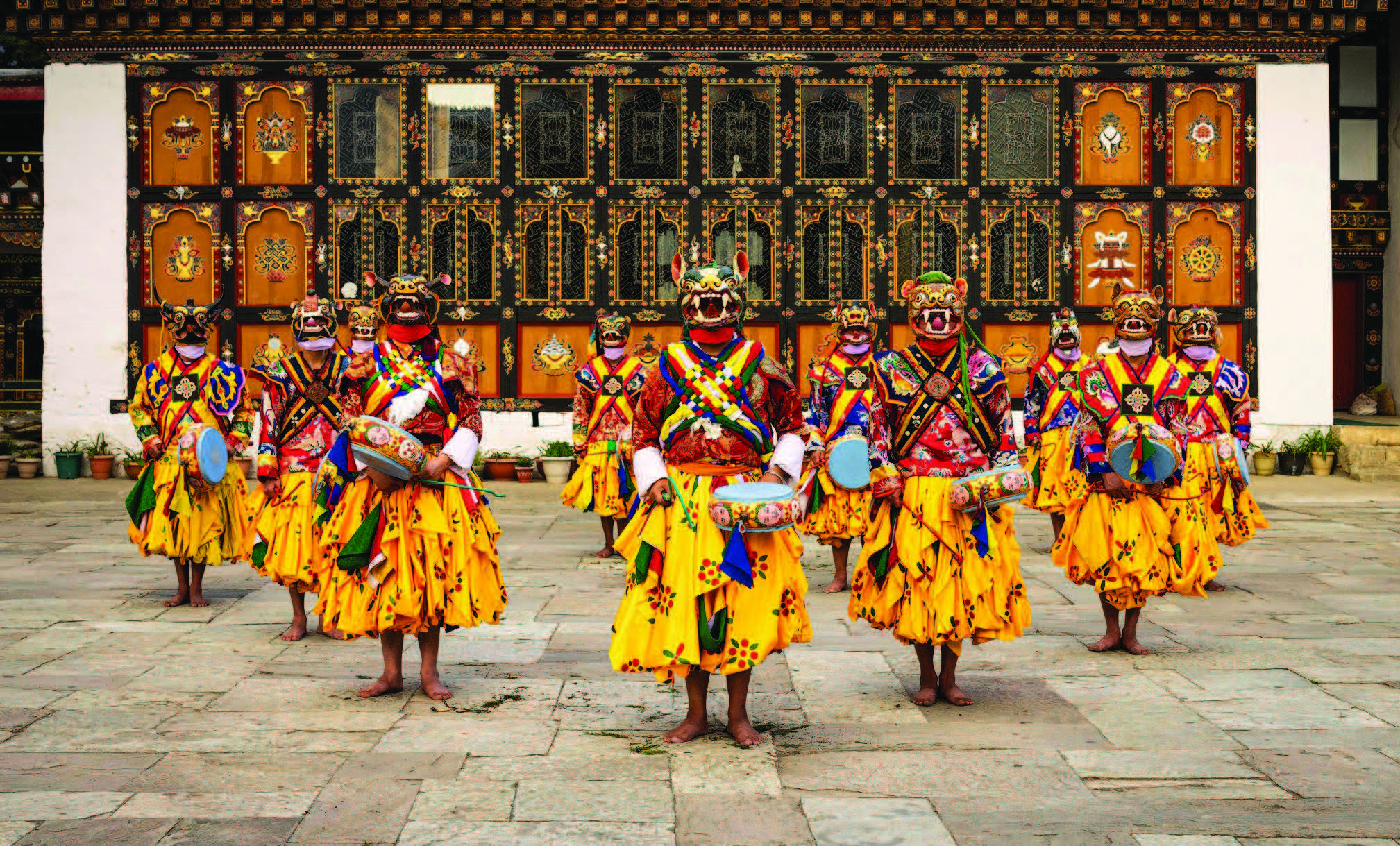
Many times, cultural forms are non-material in nature or lack tangible shape. Intangible culture surrounds us in our everyday lives, but is often “invisible” to many people because it is normalized, and cannot be touched or seen. It only becomes more evident when we experience cultural practices in other places beyond our own homes and nations that take us out of our normal comfort zones. In-tangible culture includes things such as cultural customs, social norms, sounds, happenings and events that can be recorded but not touched. Often, intangible culture is conceptual but nonetheless drives our everyday and celebratory actions and interactions with one another. It encompasses things like knowledge, skills, attitudes, beliefs, song, music, drama, festivals, oral traditions, etc. Some examples of intangible culture include national dances, religious rituals, cultural practices, songs, festivals, concerts and theatre performances, etc.
Most interestingly, culture is not only the domain of humans, but of other sentient beings who also enact culture. Numerous scientific studies have documented evidence of cultural behavior amongst primates, mammals, canines, whales, birds, insects, trees, plants, and other sentient beings we share this precious planet with. This sense of respect for nature and the inter-connectedness among all humans, and between humans and sentient beings is encapsulated in many of the policies, laws and cultural and spiritual practices of the Himalayan Kingdom of Bhutan.
Cultural Forms and Practices in Bhutan
The Bhutanese term for culture is lamsol, which means “following a path”. True to this meaning, many cultural practices and objects in Bhutan are actively engaged and used by people in their everyday lives for important cultural, religious, spiritual, wellbeing and livelihood purposes – ranging from housing, furniture, dress, rituals, social norms, dance, music, festivals, sports, cuisine, to fashion.
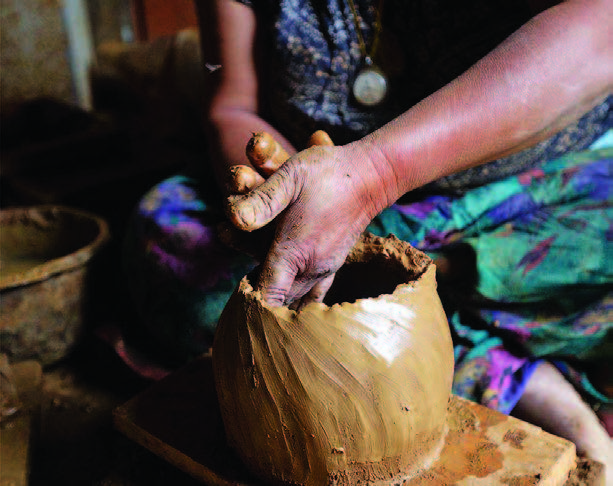
Material cultural forms include Bhutanese dzongs (for- tresses), lakhangs (temples), houses, statues, paintings, to name a few. Many material cultural forms are recognized and promoted in the country, otherwise known as the thirteen traditional Bhutanese arts and crafts that include: carpentry (shingzo), masonry (dozo), carving (parzo), painting (lhazo), sculpting (jinzo), bronze-casting (lugzo), blacksmithing (garzo), ornament-making (troeko), cane and bamboo making (tsharzo), weaving (thagzo), woodturning (shagzo), paper-making (dehsho), and tai-loring, embroidery,and applique (tshemzo). In Bhutan, it is possible to find objects used from all these thirteen art and craft forms within one single space, such as a Buddhist lhakhang, for instance.
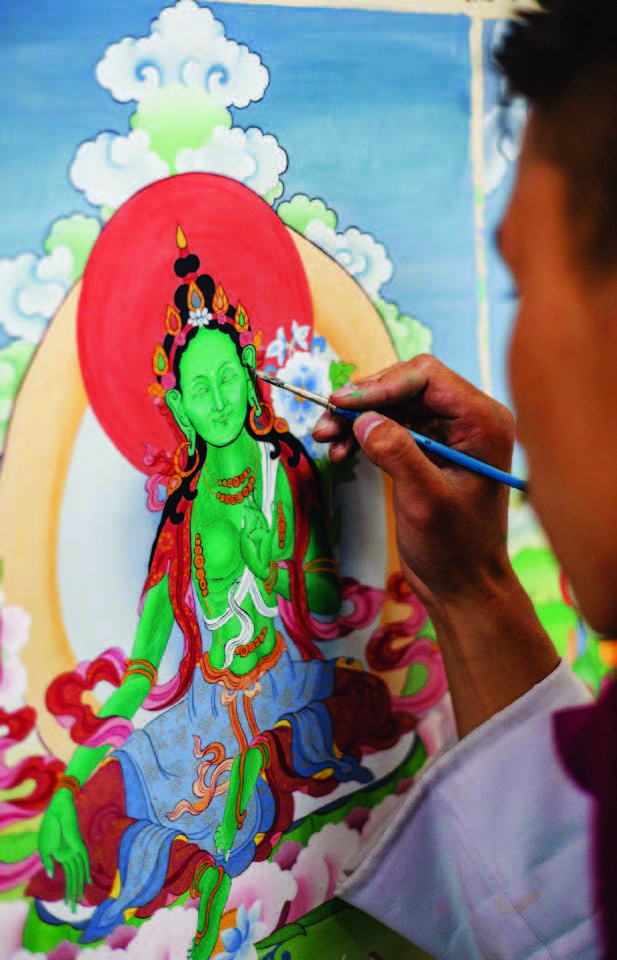
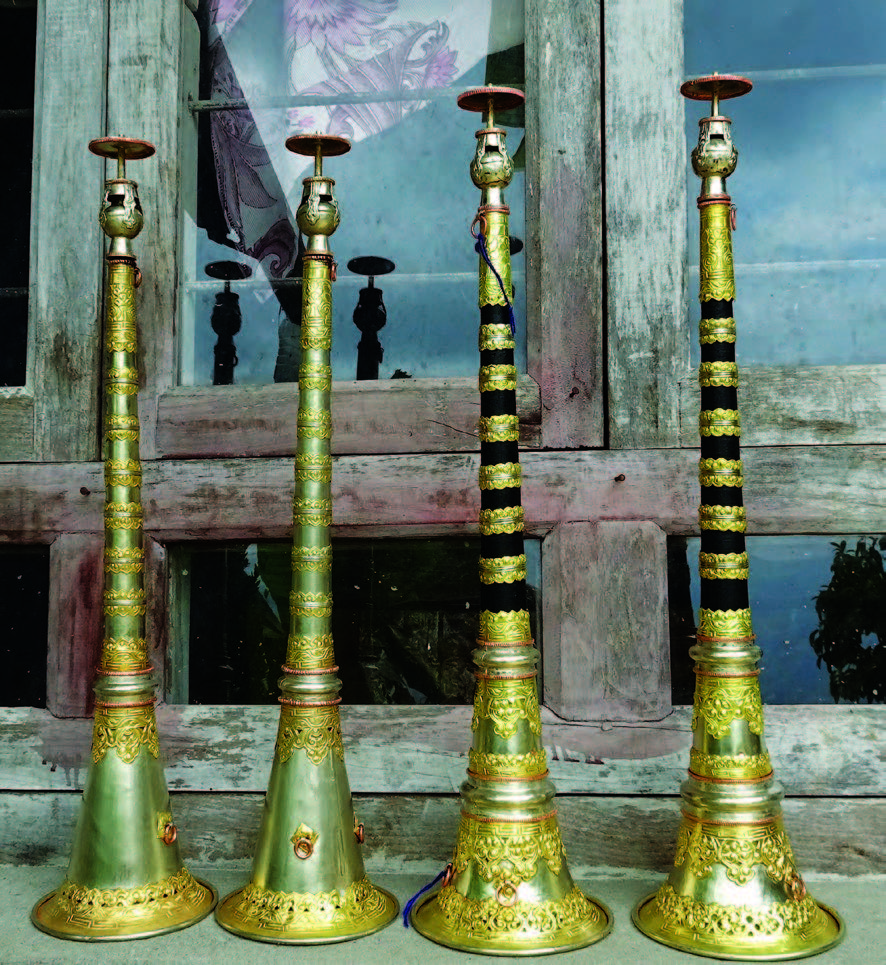
It is possible to see material culture in action in many spaces. There are many bustling local markets through- out the country, frequented by Bhutanese and tourists alike, where a rich variety of cultural crafts and products are sold. Often these local markets include local agri- cultural produce, prepared foods (such as honey, jam or chili paste) and cuisine (such as the delicious momos, or dumplings the region is known for). This makes local markets a popular stop in tourists’ itinerary. Many travel- ers visit sites where artists are actively creating cultural objects by hand. It is fascinating to watch something creatively materialize from a block of wood to an intricate mask or bowl, or from an assembly of colorful threads to the intricately rich textile worn by women and men. Over the years, tourists have become excited to outfit them- selves in Bhutan’s national dress, the colorful gho and kira, as well as the beautiful hand-crafted jewelry such as the intricately hand-crafted silver broches that women wear to fasten their tegos (traditionally woven short jacket).
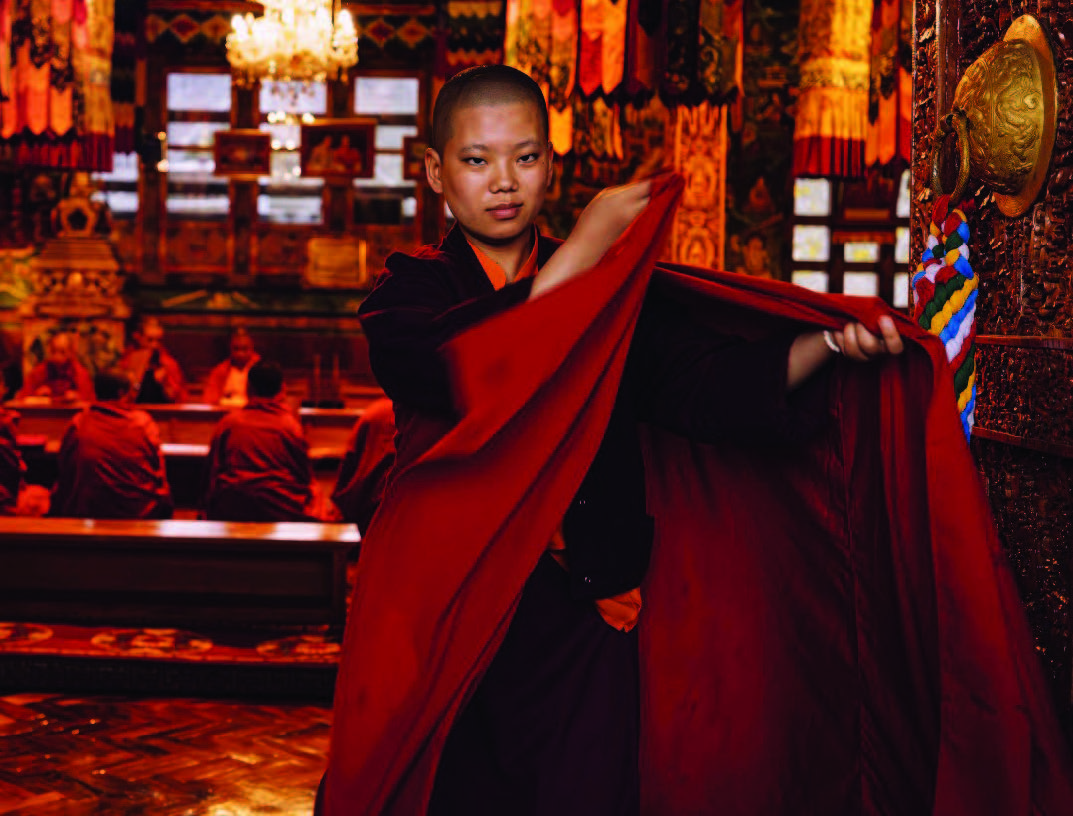
The diversity and abundance of intangible cultural practices in Bhutan make it incredibly unique, and a major attraction for travelers and pilgrims alike. Intangible cultural forms include famous masked dances, music, chants, rituals, oral histories, spiritual beliefs, among many other cultural practices that Bhutan is known for. It is possible to see intangible culture in practice in its many lhakhangs on a daily basis, such as Buddhist rituals, chanting, and practices such as the turning of prayer wheels. During tshechus (Buddhist festivals held annually in monasteries across the country) and special occasions, people wear their most prized and intricate kiras and ghos, some of which have been handed down and care- fully preserved over many generations. The colors of the textiles worn by the spectators of the festivals are as spectacular as the masked dances themselves. Tshechus are a major part of Bhutanese life and provide unique insights into the importance of the intertwining of culture, spirituality and religion in the Himalayan Kingdom. The Bhutanese calendar is full of such festivals across the country, where masked dances, music, chanting and story-telling inter-mix to provide one of the most anticipated events every year. For Bhutanese women, men and children, such events provide an important cultural celebration and bustling social event to meet friends, neighbors and family from surrounding villages and towns, where people come together for social activities, spiritual rituals, food, drink, celebration and festivities lasting days.
What is remarkable is that cultural forms, both tangible and intangible, contribute to the economy, society and the sense of nation in important ways, thus providing livelihoods for many Bhutanese artisans, artists, architects and Buddhist practitioners. Many aspects of culture are unique to Bhutan, which is why a visit to the Himalayan Kingdom to experience its rich cultural heritage is on many people’s buckets lists across the world. The nation recognizes the importance cultural practices for society, economic activity and tourism, and actively supports this work in many of its national programs, such as trainings, trade, commerce, education, health, wellbeing and research programs.
Culture of Happiness
In Bhutan, culture is not a mere object or commodity to attract tourists. The country takes an exceptional path in valuing culture at the national level, to deepen the wellbe- ing of its citizens. While in many countries across the world, national budgets for the arts, culture and humani- ties are being slashed (because sometimes culture is seen as playing an “invisible” and therefore unrecognized role in people’s life), over its past history Bhutan has retained this important aspect in policy-making. However, as western-style development approaches and business- models that discount or ignore culture (as well as the role of the environment and nature) make in-roads, these may come under threat. Nonetheless, at the heart of Bhutan, is its unique and rare cultural landscape, which is buttressed by strong environmental laws and cultural policies. These together provide a common cultural identity to its people, and also enable the very foundation of tourism which draws thousands of grateful travelers from across the globe with cherished memories of their time in Bhutan.
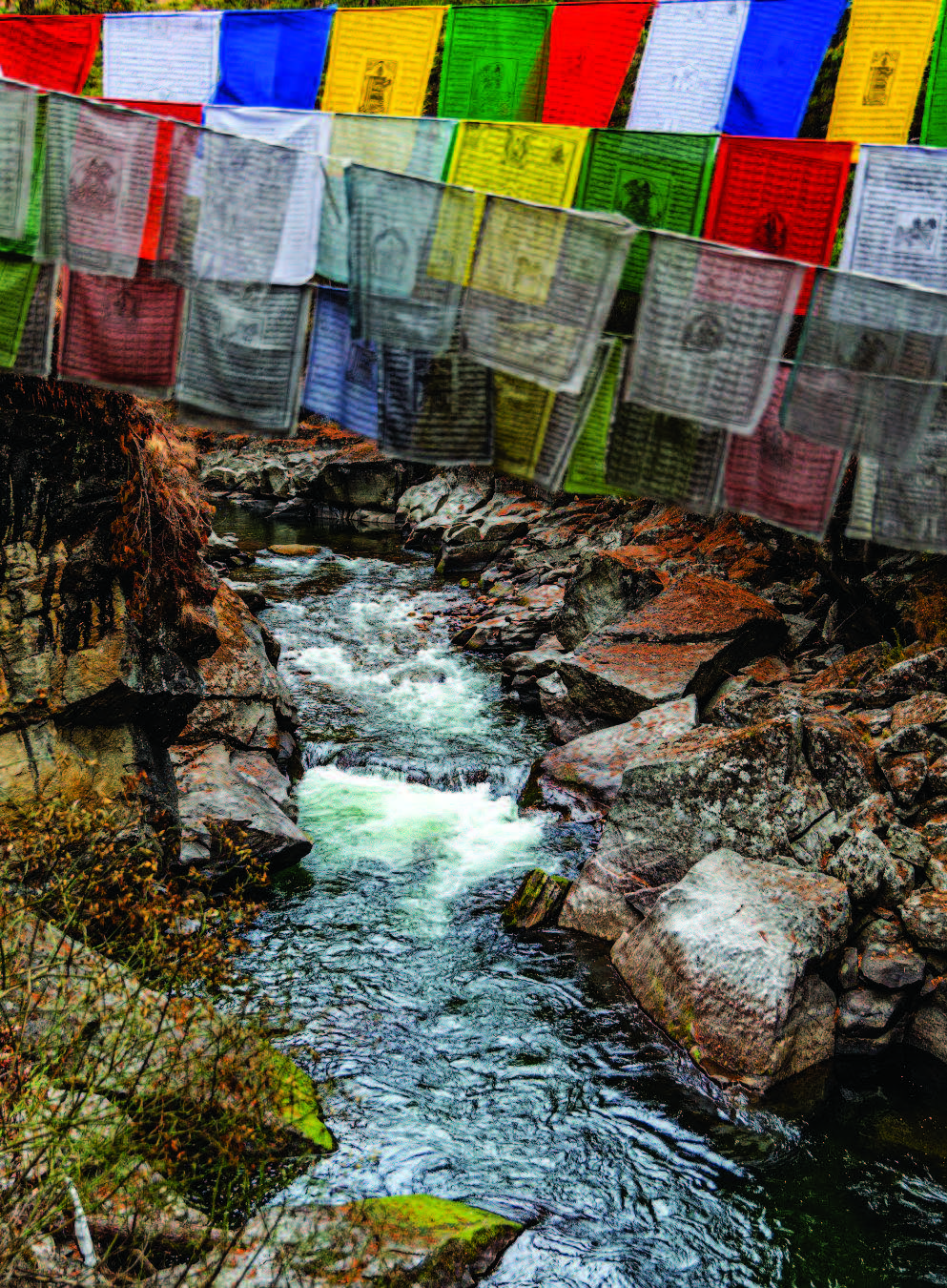
With the global onslaught of hallowed-out techno- cratic business models, Bhutan has several protections for its unique cultural landscape against the negative impacts of modernization. The significance of culture is encoded in Bhutan’s Constitution, which is progressive in recog- nizing the critical importance of preserving, protecting and promoting cultural practices, heritage and spiritual values that are at the heart of a shared Bhutanese national identity and cultural landscape. Cultural heritage encom- passes monuments, places, objects of artistic or historical interest and importance, including dzongs (fortresses), lhakhangs (temples), Goendeys (religious-spiritual communities), Nyes (sacred sites), Ten-sum (Buddhist principles, referred to as the three jewels of Buddhism), spiritual-ecological sites, language, literature, music, visual arts, and religion that enriches society and the cultural life and wellbeing of its citizens. In its wise consideration of culture, the Constitution recognizes that culture is always evolving and changing. The Bhutanese State plays a key role in strengthening and facilitating the continued sup- port and evolution of Bhutanese values and institutions in progressive and sustainable ways. The constitution goes one step further by encoding the conservation and support for research on the local arts, cultural customs, knowledge and practices.
The importance of preserving and promoting culture is also encoded in Bhutan’s path-breaking moral concept and alternative for measuring progress, Gross National Happiness (GNH). GNH is more robust than most other global measures in the inclusion of environment, culture and governance pillars, over and above the standard socio-economic pillar normally measured in other parts of the world (i.e. dominant and conventional international metrics such as GDP, Gross Domestic Product, narrowly focus on economic growth, thus leading to massive envi- ronmental destruction and cultural loss). Indeed, among the four pillars of GNH of cultural preservation, environ- mental conservation, good governance and sustainable and equitable socio-economic development, the cultural pillar stands out as path-breaking. GNH is further broken down according to a set of nine mutually supportive do- mains. First, in terms of culture, GNH measures cultural aspects of life that contribute to happiness through indica- tors such as local language, artisan skills, socio-cultural participation and driglam namzha (cultural practices and norms in formal settings and occasions). Second, over and above this, GNH measures cultural elements in domains such as ecological diversity and resilience, com- munity vitality, psychological wellbeing, and time use. Lastly, while other conventional domains in GNH include health, education, living standards and good governance, it is in its treatment of culture that GNH provides innovative thinking in terms of the ways in which culture contributes to happiness and wellbeing in Bhutan, as well as important wellbeing concepts for the world at large. In all these efforts, the role of culture as the central life force of Bhutan is recognized, supported and celebrated. There are many things that travelers to Bhutan can also do to support culture.
Towards Culturally Mindful and Respectful Travel
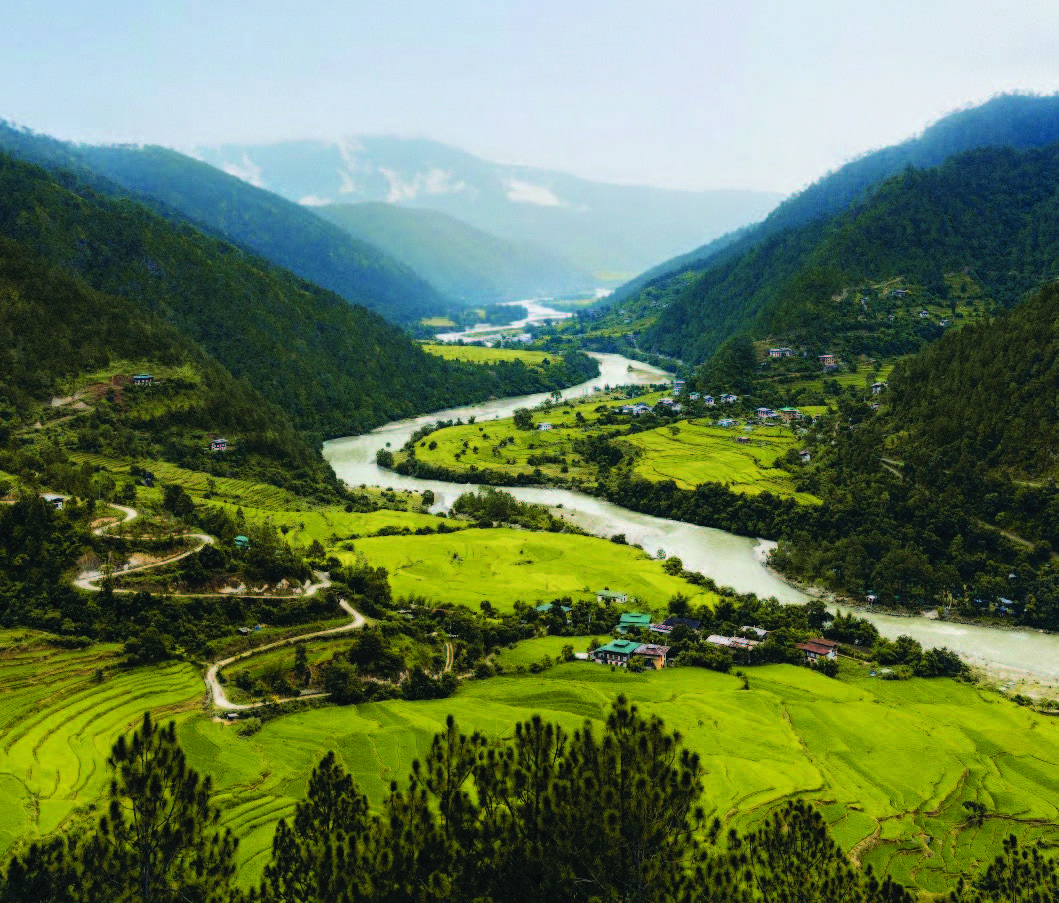
Travel to the wonder of culturally rich Bhutan is a unique experience. It allows travelers to experience a country that places central importance on the promotion and preservation of cultural practices, and the conservation and protection of nature. The country is rich in cultural practices, objects, and wonders. The majestic and auspicious sacred sites of Bhutan remain amazingly protected against the forces of modernity, as they should be. In this majestic Himalayan Kingdom, foreign and national travelers alike have a responsibility as travelers, pilgrims and tourists. We must tread carefully and gently, with great respect, loving-kindness and compassion towards its local cultural spaces and sites, and all its inhabitants, big and small, human and non-human, and its local cultural and spiritual practices steeped in age-old knowledge. These culturally, spiritually and environmentally important sites are not just “tourist destinations” but are cultural ways of life for people and other sentient beings that inhabit these precious spaces. We are mere visitors passing by, but also have the potential of being transformed by our travels and taking and disseminating our learnings widely when we go back home, while being careful not to impact or harm such fragile locales we visit in turn. As the famous saying goes, take only memories, leave only footprints. Bhutan provides the traveler an unprecedented experience in culturally rich spiritual setting, rich with age-old wisdom – a gentle yet powerful reminder that we are all interconnected with one another, to nature and this amazing planet we share with all other sentient beings.
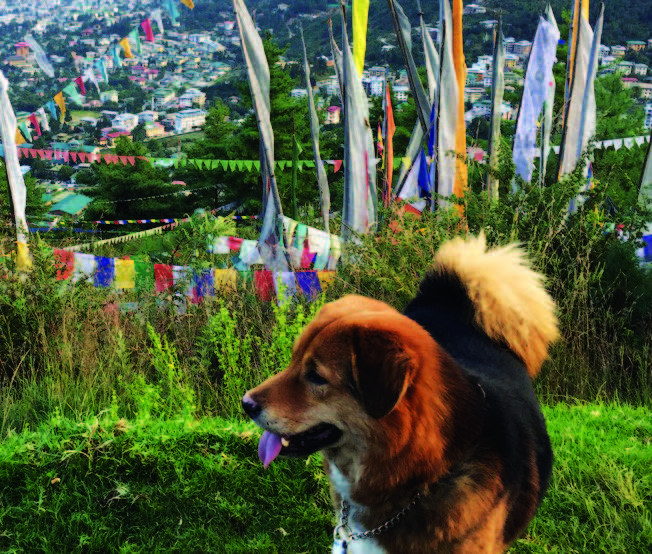
This article is dedicated to Han Solo, a beloved dog who passed away on August 30th last year. Born in Laya, Bhutan, he remained with me in Bhutan for eleven years, as well as spending time in Nepal, the Philippines and Canada. At his heart, he was a true, enigmatic Tibetan mastiff who loved walking in the mountains and racing through its rich forests. With the true pride of a lion, he would often pause at the mountain’s edge to take in the breathtaking panoramic views of the Himalayas, the tall forests below, and the prayer flags undulating in the wind. He had many adventures that were the stuff of legend. His outlook on life was one of unconditional love, courage, and thirst for adventure. He will be dearly missed by everyone whose hearts he touched. Han Solo, thank you for teaching me about selflessness, dignity, loyalty, compassion, empathy, generosity, kindness, and how to live life to the fullest with happiness and openness. Through you, I learned much about wisdom, truth, and respect for others – and above all, in the words of His Ho- liness the Dalai Lama, to never give up, no matter what is going on in the world, never give up. May you have a swift and higher rebirth, my dear, beloved Solo.
Dr. Ritu Verma
An anthropologist, researcher, author and photographer, she has published extensively on GNH, Bhutan, and beyond. She is a regular columnist in this magazine. Find her at rituvermapuri.wordpress. com, ucla.academia.edu/RituVerma and twitter.com/Rituvermapuri

